Showing posts sorted by relevance for query chizuko. Sort by date Show all posts

Monday, August 18, 2008

8/14/08: Chizuko-san's Last Day at Sakagura

After learning from Kadoi-san that Thursday 8/14/08 would be Saké Sommelier Chizuko-san’s last day at Sakagura, it was time to pay my respects for her outstanding service and friendship. Her reason for departure is to run her own company that focuses on networking and education. Her main client base will be the Japanese brewers.

Here's what transpired over the evening:

Chizuko-san's impact is felt throughout Sakagura...

Chizuko-san and Yamaguchi-san took care of me for the evening

Isojiman Junmai Ginjo. Tonight,I noticed its outstanding depth and acidity.

Chizuko-san let us try Sato No Homaré Yamawatari Nama which had gone bad. This bottle lacked any character and vibrancy, and was truly flat. She cited sotrage issue prior to arriving at Sakagura as causing this type of damage.

MY next selection was Eiko Fuji Nama, as I fondly remembered tasting it in April. Comparing to Isojiman, I noticed its fruitier and focused style.

Next, Kadoi-san opened up two bottles he recently found in Japan. Both were by Tatsuriki from Hyogo Prefecture. The Junmai Ginjo was soft and balanced, and I was surprised that it didn't have the dominant character usually associated with Ginjo made from Yamadanishiki.

The Junmai Daiginjo was initially very soft, and felt like gentle water; however, it gained structure after chilling. The brochure indicate that Tatsuriki makes their saké using five of my favorite rice: Yamadanishiki, Omachi, Yamadaho, Shinriki, and Gohyakumangoku. I'm very intrigued by these selections, and hope I can find them in the States soon...

To wrap up the evening, I ordered Ginga Kougen *gasp* beer from Iwate Prefecture. This was fantastic: crisp, vibrant with taste of barley, followed by complex hops on the finish. I highly recommend this for beer lovers.

Just when I was getting ready to leave around midnight, Kadoi-san asked me to stay. Sakagura was going to hold a staff farewell party for Chizuko-san. Here is Chizuko-san with Yamaguchi-san and sommelier Momose-san.

For a special lady, a very special saké: The Daishichi Myouka Rangyoku.

Myouka Rangyoku with flowers and card for Chizuko-san.

Chizuko-san and her husband Jim.

Staff getting ready to toast. I felt very much honored and also a little odd to be a part of intimate staff farewell party; I kept telling myself that in a way, I am there to represent the customer base...

Kadoi-san enjoying the aroma. The thing that really struck me about this saké was the unbelievably long finish, singing its sweet song on my tongue. The pour easily lasted 30 minutes to finish.

After the party, Chizuko-san, Jim, and I went to Donburi Ya to wrap things up. I ordered "stone-bowl cooked udon" and Yebisu beer. After Myouka Rangyoku, there was no way I was having another saké!

By the time we were done, it was 3:00 am... it was really a good thing I had scheduled day off for Friday!

Chizuko-san - Thank you, and Good Luck!!!

Tuesday, November 14, 2006

Review of 2006: July/August

Summer months were relatively tame in terms of activities. In July and August, there were only two notable events, but with the right saké, situation, and people, the events are sure to be a winner.

July 27, 2006

My favorite izakaya, Sakagura, hosted yet another saké dinner, this time under the theme of Sakés for Summer as selected by their kimono-clad Saké Sommelier, Chizuko Niikawa.

The first selection was a German Riesling-like low alcohol saké, Ichinokura Himezen (SMV: -65, Acidity: 5, Rice: Toyonishiki, Seimaibuai: 65%, Yeast: N/A). I often refer to this as umeshu-light, as it has the tinge of Japanese plum flavor and balanced sweet/tart profile. Chizuko-san said that this would be the perfect saké to quench your thirst, and build appetite before dinner.

The second selection was appropriately enough, Summer-release namazaké from Umenishiki Brewery of Ehime Prefecture (SMV: +4, Acidity: 1.2, other data N/A). This happened to be a super premium Junmai Daiginjo grade, and had a very expressive notes of pineapples and lychee, with a refreshing crispness and dryness.

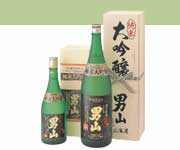
Just for good measure, the next selection was also Junmai Daiginjo, but not of the Summer-release unpasteurized style. We got to try Otokoyama Junmai Daiginjo (SMV: +5, Acidity: 1.3, Rice: Yamadanishiki, Seimaibuai: 38%, Yeast: N/A)from the northern island of Hokkaido. While there were elements of fruit, notably pineapple, on the palate, it also had the balanced grain with clean and dry finish that has been the hallmark of their seishu.

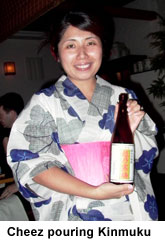
The decent from pinnacle of Junmai Daiginjo was gentle. It started with Koshi No Kanbai "Kinmuku" Junmai Ginjo (SMV: N/A, Acidity: N/A, Rice: Yamadanishiki, Seimaibuai: 45%, Yeast: N/A)from Niigata Prefecture. Mildl fruity, grainy, and dry, it was the perfect progression from Otokoyama.

The progression continued with surprise addition, Momokawa Tokubetsu Junmai (SMV: +2, Acidity: 1.4, Rice: N/A, Seimaibuai: 60%, Yeast: N/A) from Aomori Prefecture. Served in an iron pot, I was expecting a warm saké, but that turned out to be an illusion. After Junmai Ginjo, this went down even more like water, although I did detect hints of fruit and grain as well.

The dessert was served with Hanahato (Japanese only) Kijoshu (SMV: -44, Acidity: 3.5, Rice: Chouseishinsenbon, Seimaibuai: 65%, Yeast: Assoc. #9). To qualify as Kijoshu, the water is replaced with Junmaishu prior to bottling and aging (8 years in this case), so this step is very similar to Port or Sherry. Like Port, the flavor contains nuts, dried fruits, raisin, dark chocolate with a long finish. Another perfect way to end a perfect evening...
************************************************************
August 8, 2006

On this day, we had what can be described as Saké Summit II. Since Sakurai-san was in town, we decided to have a BYOS party at my friend Hideo's place on UES. In attendance were Saké Buddies Hideo, Tim Sullivan, Lefty, Warren, Sakurai-san, and Nogami-san. Thanks to Tim for sharing the pictures, as usual. Without further ado, here are the selections:

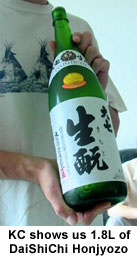
Saké #1: We started with a Kimoto Honjozo (SMV: +1, Acidity: 1.4, Rice: Gohyakumangoku, Seimaibuai: N/A, Yeast: N/A) by Daishichi Brewery of the Minowamon fame. This is a good starter, as it is refreshing style with balance of fruit, grain, and dryness.

Saké #2: was the ever-so-reliable Masumi Okuden (SMV: +3, Acidity: 1.5, Rice: 80% Miyamanishiki/ 20% Hitogokochi, Seimaibuai: 60%, Yeast: Assoc. #7), where you can find my notes about half way down this page.

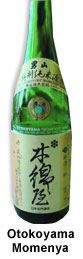
Saké #3: Otokoyama "Momenya" Tokubetsu Junmai (SMV: N/A, Acidity: N/A, Rice: N/A, Seimaibuai: 55%, Yeast (N/A). Warren was very intrigued by this version of the Otokoyama, so this was his contribution. This saké was very interesting, offering heavy contrast to the elegant Masumi. More expressive with hints of banana, the flavor seems to intensify and firm towards the finish, reminiscent of a Genshu.

Saké #4: Aiyu "Tomoju" Junmai Ginjo (SMV: +2, Acidity 1.5, Rice: Gohyakumangoku, Seimaibuai: 50%, Yeast: N/A), selection by Lefty. As some may recall, I have a pretty high regards for this saké. Incidentally, I have received email from Mr. Kanehira, EVP of the brewery, that Tomoju received a Gold Medal in their category. In other words, a good choice all around!

Saké #5: Kurosawa Junmai Daiginjo (SMV: 0, Acidity: N/A, Rice: N/A, Seimaibuai: 40%, Yeast: N/A). Synonymous with Nagano saké, Kurosawa has a very distinct style that shows up in their limited production (1,500 bottles/year) Junmai Daiginjo. While a lot of Dainginjo-grades showcases fruit, Kurosawa has great balance of ginger, hibiscus, cedar, herbs, spices, and umami. Just an unique and incredible style like no other.

Saké #6, 7, 8: Trifecta of Dassai. Mr. Sakurai brought 3 small bottles of Dassai for us to taste. Let's just say that there weren't enough! In the past, I have heaped praise upon praise on their Junmai Daiginjo and Junmai Ginjo, so now, I'll take time to provide notes on their Junmai Ginjo Nigori (SMV: +6, Acidity: 1.2, Rice: Yamadanishiki, Seimaibuai: 50%, Yeast: N/A). Staying with their stringent standard, this Nigori is polished down to 50%. The result is a very fragrant, light, and crisp style with fruity flavors and amami that leads to a dry finish. The amount of lees is mild, providing a nice texture without being overwhelming.

Saké #9: Senkin "Ginyu Shizuku" Junmai Daiginjo (SMV: +5, Acidity: 1.3, Rice: Yamadanishiki, Seimaibuai: N/A, Yeast: Tochigi Yeast). This was Tim's selection, a free-run style saké from Tochigi Prefecture. After having 8 (?!) high-quality sakés of varying styles, what better way to end the tasting than with a fruity, rich, and soft style Junmai Daiginjo? The flavors of melon and pineapple was perfect, almost like dessert, and the gentle mouthfeel is exactly what was needed at that point. Only thing that could be better is for that Chinese food to arrive...

Tuesday, November 28, 2006

10/8/06: Sakagura

One Sunday after work, I stopped by Sakagura with Lefty, as it was the last day of the two- week saké special commemorating their 10 Year Anniversary.

The first saké on the menu was Ryusei Junmai Daiginjo (SMV: +3, Acidity: N/A, Rice: Yamadanishiki, Seimaibuai: N/A, Yeast: N/A), from Hiroshima Prefecture. I've had their Tokubetsu Junmai, and always thought it was atypical for Hiroshima saké, as it had more expression and fruit oriented rather than having a distinct earthy component like Kamoizumi or Suishin. This was very good with deep and firm fruit expression and long finish.

Next up was Kirinzan Jumai Daiginjo (SMV: +3, Acidity: 1.3, Rice: Takanenishiki, Seimaibuai: 45%, Yeast: N/A), from Niigata Prefecture, which was very memorable for its uniquely shaped blue bottle. Initially, this was a lot like many Niigata saké with notes of steamed rice and cream with initial sweetness. However, this saké had an extraordinary long finish that slowly turned dry.

Although late lunch meant I wasn't particulary hungry, Chizuko-san gave us the seasonal menu. Not a bad idea, since we were planning on consuming quite a few more selections. We chose couple of superb dishes, including home-made tofu that uses mascarpone cheese, and the prized matsutake mushroom tempura served with salt from Okinawa.

With such fine cuisine on the way, my next choice had to be equally great. For that, I turned to Yusura Junmai Nama Ginjo (SMV: +3, Acidity: 1.3, Rice: Yamadanishiki, Seimaibuai: N/A, Yeast: N/A), by the legendary Sudo Honke ("House of Sudo") of Ibaraki Prefecture. This was the perfect choice to go with the dishes, as vibrancy of the namazaké was contrasted with the silky texture of tofu while cutting through the tempura skin. Flavor-wise, it was mostly creamy steamed rice with touch of mint and a very long finish.

I couldn't decide what to try next. Chizuko-san gave me taste of clean and grainy Aramasa Junmai (SMV: +3, Acidity: 1.6, Rice: N/A, Seimaibuai: N/A, Yeast: Assoc #6 a.k.a. "Shinsei" or "Aramasa"), from Akita Prefecture and much richer and earthier Bandai Junmai (Data N/A), from Fukushima Prefecture, but neither really hit the spot to follow Yusura. Flipping through the extensive beeverage menu, I found a saké that I've always wanted to try: Narutotai Genshu (SMV: +2, Acidity: 1.4, Rice: Yamadanishiki, Seimaibuai: 50%, Yeast: N/A), from Tokushima Prefecture. I've had other Genshu, but this one always intrigued me for some reason. ALthough Narutotai is brewed as Yamahai in addition to being a Genshu, the theme of this saké is balance. Right off the nose, there is the Yamahai-like nose of steamed rice and nuts. On the palate, there is a gentle yet expressive steamed rice and mild fruit that leads to long, balanced, and clean finish. This is definitely one of the best Genshu I have tried.


The last order of the night was recommended by Lefty, and it was Daruma Masamune Koshu, a multi-vintage blend of '72, '82, '84, and '94 vintages. Simply put, Koshu is Japan's answer to sherries and ports. Daruma Masamune was complex, starting with oxidized aromas of dried fruits like sherry. The flavor slowly evolved from sherry to dark chocolate before finishing with long notes of coffee and spices. This is a great study in versatility of saké, and an appropriate coda for the evening.

Sunday, May 04, 2008

5/2/08: Fifth Akita Saké Connoisseur's Club Tasting

One of the fastest growing saké event in NYC is the Akita Saké Connoisseur's Club tasting event, already on its fifth event since its inception on 11/10/06. By fifth incarnation, Yamamoto-san and his colleagues managed to gather 27 selection (on paper... I believe the actual numer poured was 28) from 15 breweries, including several bottles that are even rare to find in Japan. Of course, there were some familiar faces attending, including Timothy, my partner in crime Janie and her friend Val, Japanese ceramic enthusiast Steve, Lefty, as well as Chizuko-san, Keiko-san, and Midori-san on the other side of the table. In addition, there was a shocking scene (scroll down below for photo evidence.)

Of those 28 selections, 8 were from Kimura Brewery, covering wide spectrum of styles from Junmai Nigori to Daiginjo Genshu. It was fun to try the earthier and chocolate-like "Munenouchi" Tokubetsu Junmai, followed by fragrant and fruitier style represented by "Kimura" Junmai Daiginjo. "Bisuikan" was the earlier reported Daiginjo Genshu (no wonder Jack Bauer got drunk), wih a full and soft approach with essence of rice and grain on the palate.

The first selections quickly pointed out the diversity of Akita style. Throughout the evening, I could categorize saké into three main categories: ripe & fruity, subtle and long (koji and umami), and hearty Junmai.

Some of the standouts included Saiya Shuzo's Kacho Gesseki Daiginjo Genshu and Tenju Shuzo's Chokaisan Junmai Ginjo (scroll down for details) in the ripe & fruity style that tasted far more like a Daiginjo class saké than Ginjo. The bottle of Chokaisan is pictured to the left, held by... Mr. Sakurai?! I believe this would require case study on saké polygamy, and pending the outcome, an exercise in blackmail.

The true standout came from the hearty Junmai style. Because many modern breing styles tend to be fruity in style, it is reassuring at times to have sakés that are brawny, earthy, and taste old-school. Hokushika's Secchu Chozo Junmai was one such saké, with incomparable flavors of cheese and cheese, with rich and long umami on the finish. (It tastes far better than it sounds, trust me!).

The tasting was accompanied by vrtuoso violin performance from Machiko Ozawa, who I might add, is from my hometown of Kamakura. Classically trained through Julliard School, her style is very diverse. For those that were fortunate to pay attention, you might have seen a budding starlet in action.

Thursday, December 21, 2006

11/10/06: Sake Double- Header

When it rains, it pours, and sometimes, that's a good thing. Like today, I had two saké events to attend, one where I was a presenter and second where I was an attendee. Not surprisingly, there were lot of pouring to be done.

5:00 pm~ 6:30 pm: Saké Tasting at Daily Candy

I was asked by friendly staffs from Daily Candy to help with a sushi and saké event for their clients. With the goal being educating about 25 attendees on sakés, I recommended the following 6 bottles covering different grades and production methods:

Aramasa Junmai: From Akita. Dryness: +3, Acidity: 1.6. Mild nuts, grain. Medium- bodied with clean notes of steamed rice and grain. Refined, light finish. Pair with lighter meats, tempura. Serve warmed or chilled. (Pic, right)

Bandai Junmai: From Fukushima. Aged one year in tank, resulting in a slightly oxidized style. Full- bodied with dried fruits and nuts on the nose, followed by dried fruits and hints of soy sauce on the palate. Earthy dishes, red meat. Serve warmed or chilled. (No picture available)

Oni No Shitaburui Honjozo: From Tottori. +12, 1.4. Some fruit, but mostly grain. Medium- bodied, very dry, tastes like saké. Can be served warmed or chilled. (Pic of label, left)

Shirayuki Shiboritate: From Nada (Hyogo). +3, 1.2. Pasteurized once, with added alcohol. Made once a year. Light, easy drinking type. Good with stewed dishes, bouillabase. Serve chilled or warmed. (Pic N/A)

Daishichi Kimoto Honjozo: From Fukushima. +1, 1.4. Made in a labor-intensive Kimoto method to enhance fermentation (=richer flavor.) Mildly fruity nose followed by refreshing notes of mild fruit and grain on the palate. Pair with fish, lighter meats, or well-seasoned vegetables. Best served chilled but can be warmed. (Pic, right)

Kaori Junmai Ginjo: From Yamaguchi. +3, 1.5. Flavors of sharp, fruity, and juicy Muscat grapes. Medium-bodied with medium dry finish. Pair with fish, lighter meats, well-seasoned vegetables, creamy sauces, and tomato sauces. Serve chilled only (Pic, left).

Sawanotsuru Zuicho Junmai Daiginjo: From Hyogo. +0, 1.7. Richer style of daiginjo. This particular one has a very low fruit in the palate, instead featuring sweetness of the rice. Versatile pairing with food, ideal with appetizers. Serve chilled. (Pic, right)

The event was basic explanation and Q & A between sips of saké and bites of sushi. The attendees were later forwarded the exact notes above, as well as list of resources for further studies. Unfortunately, my lens got stuck after I dropped my camera this morning, so I have no photographical evidence I was there!

It would've been really cool to stick around longer, but I had to attend the inaugural...

7:00 pm~9:00 pm: Akita Saké Connoisseur's Club Tasting Event

I was informed of this event through Yamamoto-san, one of the founders of this Club. The event was held at the World Sake Importers' NY Office. Among the attendees were Chizuko-san from Sakagura and Natsuyo Lipshutz, both co-founders of the club, as well as Keiko and Asami-san from WSI, Henry Sidel from Joto Saké, Tim Sullivan, and Lefty.
There were officially 12 sakés on the menu, plus Yamamoto-san opened up one bottle for founders and friends, after most of the attendees left. The list is as follows:

Akitabaré "Sui Raku Ten" Daiginjo, Shimizu No Mai Junmai Daiginjo, Yuki No Bosha Junmai Daiginjo, Ama No To "Hyosho Usu Nigori", Yuki No Bosha Junmai Ginjo, Tenju "Chōkaisan" Junmai Ginjo, Hinomaru "Benimansaku" Junmai Ginjo, Dewatsuru "Matsukura" Junmai Ginjo, Hideyoshi "Aki No Ta" Junmai Ginjo, Naba Honten "Jizaké Monogatari" Yamahai Junmai Ginjo, Kariho "Namahagé" Junmai, and Akitabaré "Koshiki Junzukuri" Junmai.

Since I've covered some sakés extensively in the past (such as Yuki No Bosha), here are three sakés that made a big impression on me:

* Tenju "Chōkaisan" Junmai Ginjo (SMV: 0~+2. Acidity: 1.3~1.5, Rice: Miyamanishiki, Seimaibuai: 50%, Yeast: ND-4). With the polishing ratio that qualifies as a Daiginjo, "Chōkaisan" was the best of the new sakés I've tried. Very fruity yet light and elegant, with umami towards the finish, this saké combined elegance with substance.

* Akitabaré "Sui Raku Ten" Daiginjo (SMV: +5, Acidity: 1.3, Rice: Yamadanishiki, Seimaibuai: 45%, Yeast: Assoc #9). Given to me as a gift, this was the bottle that put saké on my radar screen several years ago. Back then, I remembered this saké as being fruity and clean. This time, the impression was bit different, as I noted balanced fruitiness and grain, steamed rice, and umami. Since it was aged for 5 years in a chilled temperature, it displayed the overall roundness.

* The third bottle was the Sasabune Fukuromachi Daiginjo (Data N/A), which was the "13th bottle." This had a very fruity nose with deep flavors of pineapple and melon, and a fantasic clean and dry finish.

The inaugural event was highly attended and successful, and future prospects looks very promising for ASCC.

Saturday, October 03, 2009

5/19/09: Niigata Saké Selections Tasting

While sakés from Akita are getting lot of publicity in NYC, Niigata still carry a lot of clout in the world of saké.

On this date, I was able to sample quite a few sakés at the brewer tasting courtesy of Mr. and Mrs. Kobayashi, who run Niigata Saké Selections.

Mr. Saito from Kirinzan Brewery holding Kirinzan Junmai (SMV: +4, Acidity: 1.4, Rice: Gohyakumangoku, Yuki No Sei, Seimaibuai: 60%, Yeast: G9NF), one of my favorites from the tasting. While I am a big fan of their Junmai Daiginjo, the junmai more than held its own. Slightly more brawnier than the subtle and smooth junmai daiginjo, the junmai brings out the essence of the flavor of the rice.

Speaking of the junmai daiginjo, here is their highly distinctive bottle.

Here I am with Mr. Hirashima of Obata Shuzo, which is located on the Sado Island in Japan Sea. He was pouring their fruity daiginjo (SMV: +5, Acidity: 1.1, Rice: Gohyakumangoku, Seimaibuai: 50%, Yeast: #1701), and deep and balanced junmai ginjo muroka genshu (SMV: +3, Acidity: 1.7, Rice: Gohyakumangoku, Seimaibuai: 55%, Yeast: #1701), both from their Ma No Tsuru label.

The four diamond boxes on the family crest of the brewery represents rice, water, man, and "Sado Island terroir." Although tough to find in the NYC area, their sakés are worth seeking out.

It was great to see Mr. Aoki from Aoki Shuzo, who I first met 2.5 years ago. I noted with a tinge of fear in my voice that the Junmai Ginjo seems to be more fruitier compared to 2 years ago. Fear not, this was a result of changing rice from Miyamanishiki to the locally grown Koshi Tanrei, to keep with the brewery's philosophy of using local ingredients.

No, this man is NOT from Niigata (Sakurai-san from Dassai Brewery in Yamaguchi.)

We have couple of attendees representing Akita. Speaking with Mr. Kobayashi is Mr. Kakizaki from Asamai Shuzo, maker of Ama No To label, and saké sommelier Chizuko Niikawa.

Rick Smith of Sakaya, Tim Sullivan of Urbansaké, and Mrs. Kobayashi of Niigata Saké Selections.

Here I am with Mr. and Mrs. Kobayashi, who is holding a bottle of Yukikagé Tokubetsu Junmai (SMV: +4, Acidity 1.3, Rice: Gohyakumangoku, Seimaibuai: 58%, Yeast: S3). For under $30 a bottle, Yukikagé is one of the best valued quintessential Niigata saké, showing gentle and subtle expressions of rice and grain.

For these sakés and ones I couldn't mention, visitNiigata Saké Selections for further details.