Tuesday, November 14, 2006

Review of 2006: May

Although I attended only two events in May, they were very impressive events. Before we begin, I'd like to gice huge thanks a fellow saké blogger Tim Sullivan of Urbansaké website for granting me the permission to use some of his photos. Big "Kanpai" to you, Tim!

May 1, 2006

My favorite izakaya, Sakagura, hosted a saké extravaganza featuring 30 different sakés covering basically all types except koshu. As you can imagine, this was a saké lovers' dream!

Here are the list of sakes by category and in alphabetical order:

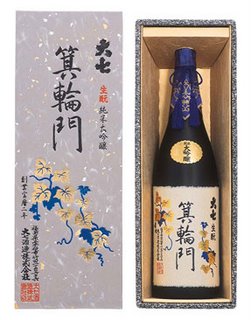
Daiginjo class: Daishichi "Minowamon" Kimoto Junmai Ginjo, Hakuryu Daiginjo, Ken Daiginjo, Kokuryu Daiginjo, Kubota "Hekijyu" Yamahai Junmai Daiginjo, Momokawa Daiginjo, Nanbu Bijin Daiginjo, Tsukasabotan Junmai Daiginjo Shizuku, Yuki No Bosha "Akita Komachi" Daiginjo.

Ginjo class: Daishichi "Kaiden" Kimoto Junmai Ginjo, Dewzakura "Oka Yamadanishiki" Junmai Ginjo, Kimi No I "Kurahiden" Yamahai Junmai Ginjo, Kirakucho Junmai Ginjo, Kokuryu Junmai Ginjo, Kudoki Jozu Junmai Ginjo, Masumi Yamahai Junmai Ginjo, Sudo Honke "Yusura" Junmai Ginjo NamazakéTsuki No Katsura "Yanagi" Junmai Ginjo, Yuki No Bosha Junmai Ginjo.

Others: Ama No To Junmai, Dassai Junmai Ginjo Nigori, Hoyo "Genji" Tokubetsu Junmai, Karen Junmai, Kasumitsuru Honjozo, Otokoyama Fukkoshu, Ryusei Tokubetsu Junmai, Taiheizan Kimoto Junmai, Yatagarasu Taruzaké, Yukikage Tokubetsu Junmai.
Here are the highlights:

Gold Medal: The top of the show goes to Daishichi Brewery's Kimoto Junmai Daiginjo, "Minowamon" (SMV: N/A, Acidity: N/A, Rice: Yamadanishiki, Seimaibuai: "Irrelevant," Yeast: N/A), where you can read the notes here (actually, scroll down 1/3 page...). As you notice, this is Minowamon's second Gold Medal finish in two month! One interesting note: few days after the JFC tasting, I met Mr. Hideharu Ota, President of the brewery. I asked about the polishing ratio, and his response was "irrelevant" due to their unique polishing ratio. It is said that 50% seimaibuai using Super-flat Polishing Method would contain more pure starch than 35% seimaibuai using traditional method.
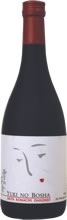
Silver Medal: Yuki No Bosha Akita Komachi Daiginjo (SMV: +2, Acidity: 1.5, Rice: Akita Komachi, Seimaibuai: 35%, Yeast: N/A) by Saiya Brewery. Using the local rice Akita Komachi, this bottle featured mildly fruity nose before revealing rich pineapple, "amami," and lychee on the palate. The finish is very long and balanced, and leaves you begging for more.

Bronze Medal: The awards mounted to a Daiginjo-class hat trick, as Kokuryu Daiginjo from Fukui Prefecture captured the Bronze. This was a revealing Daiginjo, as it was not as fruity as others that were being tasted. While it did feature mild fruit on the nose, the flavor was focused with flavors of steamed rice and presence of umami. While initially subtle by comparison, this is a saké that gets better more you drink, and just grows on you.

Eye-opener of the night: While it was far from the best saké of the night, we were introduced to a style called Fukkoshu Junmai Genshu (SMV: -50, Acidity: 3.5, Rice: Toyonishiki, Seimaibuai: 70%, Yeast: Assoc. #701), meaning "revival saké." This is a speciality by Otokoyama Brewery from Hokkaido, made in a very traditional method mimicking the style of saké from about 300 years ago. While the nose features a aromas of steamed rice, the surprise was in the whiskey-like graininess and a sweet and long finish temepered by high acidity. They say that you learn something new every day... well, this certainly qualifies as my lesson of the day!
************************************************************
May 15, 2006

Mere 10 days later, Sakagura was a host to a brewery tasting featuring fantastic selections by one of my favorite kuras, Miyasaka Shuzo and their Masumi brand of sakés. I attended this event with my Saké Buddies Tim Sullivan and Lefty.

First, some information about the kura: Established in 1662 high in the mountains of Nagano, Miyasaka Shuzo makes popular Masumi as well as their limited Miyasaka labels. They are one of the revolutionary kura, having discovered the industry standard "Association #7" yeast that is currently used by about 60% of the brewery nation-wide. After the popularity of their saké skyrocketed thanks to this yeast, the brewery built a second location to accomodate the increase in demand. With features reflecting the elements of clean water and long cold winter ideal for fermentation, Masumi is truly one of the finest terroir driven saké in Japan.

For this event, two representatives of the brewery were present: Toji (Brewmaster) Mr. Kenji Nasu, and Overseas Operations officer Mr. Keith Norum. In speaking with Keith, I discovered that he became part of this operation after meeting a representative of the brewery at a BBQ. (How come nothing like that ever happens to me?!)

The tasting began with their namazaké "Arabshiri," where you can find my notes towards the bottom of the page over here.

The next selection was Okuden Kanzukuri Junmai (SMV: +3, Acidity: 1.5, Rice: 80% Miyamanishiki/ 20% Hitogokochi, Seimaibuai: 60%, Yeast: Assoc. #7). This is one of my favorite "everyday" bottle, and one of the best value performer. As the data indicate, this can technically be called a Junmai Ginjo, but it can be found for about $23, a price that may be on the lower end even for Junmai! What I especially like about this saké is the muted complexity. There are a lot of flavor components including notes of rice, mild fruitiness, and subtle earth and grains, yet just like a fine aged wine, those elements are gracefully integrated. This is hardly a surprise, as "Kanzukuri" means "cold brewed," and this mild flavor profile is a clear testament to the slow fermentation that is the hallmark of cold Nagano winter.
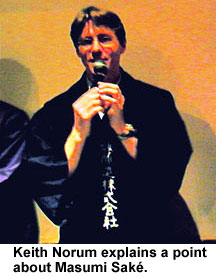
At this stage, Nasu-san, with Keith translating, ran a slide show demonstration to introduce the audience to their kura and production method. They were graceful to answer some of the more technical questions, which covered topics such as pressing method and fermentation and storage temperature.

Naturally, the next offering provided a sharp contrast to the gracefulness of Okuden Kanzukuri. Yamahai Junmai Ginjo (SMV: +2, Acidity: 1.9, Rice: 80% Miyamanishiki/ 20% Hitogokochi, Seimaibuai: 55%, Yeast: Assoc. #7) is, as the name suggests, made using the traditional slow fermentation process called Yamahai. Yamahai, like Kimoto, produces a saké that is richer and more expressive. The nose was very creamy, and the flavor was very upfront with notes of steamed rice and dried fruits before leading to a clean finish.

After that came Nanago Yamahai Junmai Daiginjo(SMV: -1, Acidity: 2.0, Rice: Miyamanishiki, Seimaibuai: 49%, Yeast: Assoc. #7), a natural progression from Ginjo to Daiginjo grade. Named after the famed yeast and made with 100% Miyamanishiki, the rice of Nagano, Nanago was very different from the Yamahai Junmai Ginjo. The nose was fruity with refreshing frothiness as one would get from green apples. The approach was decidedly softer, followed by flavors of crisp nashi (Japanese pear). The finish was very refreshing and lasting. I'd drink this all day long, except my budget won't let me!
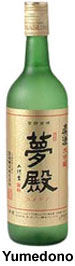
The last was the pride of the kura, Yumedono Daiginjo (SMV: +5, Acidity: 1.3, Rice: Yamadanishiki, Seimaibuai: 40%, Yeast: Assoc. #9). Made for the puropose of entering national tasting competitions, Yumedono is a limited, hand- produced label featuring the King of Rice polished down to 40%. Nasu-san explained that they use Association #9 yeast to separate itself from the competition, as ironically, there are many competing Daiginjos made using the very #7 that Masumi developed! Lastly, they add mintue amount of brewer's alcohol to preserve flavor. The result is a saké that is very fruity starting from the nose. The ripe tropical fruit notes flow right from the aroma to the palate, with a soft and velvety apporach in between. The finish is lasting and pleasantly dry. This saké defintitely hit the spot, and Keith and Nasu-san were kind enough to let me "review" this saké a few times!

Although the sakés were great, what really stood out were the passion of Keith and Nasu-san. The amount of respect and appreciation increases exponentially when the Brewmaster is there to explain all care and the details that go into making each saké, and then to have him pour part of his heart and soul into a glass for you to enjoy...

Review of 2006: April

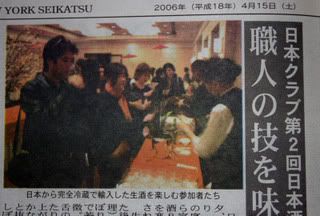
April 7, 2006: Caught in the act. Wouldn't you know it, just as I am enjoying some namazaké, I end up in a Japanese tabloid "Shukan NY Seikatsu" (Weekly NY Lifestyle.) How did I get to this point? Well...

At the Taiheizan tasting at Matsuri, Yamazaki-san was gracious enough to invite me to sampling of namazaké from the portfolio of Japan Prestige Saké Association held at Nippon Club.

Of course, nothing says springtime more than the first release of seasonal unpasteurized namazaké. These sakés feel more vibrant and fresh compared to the regular seishu, and for a good reason: they are first release of the year after harvesting the previous autumn, and active yeast provides effervescence, and many of them are made in the form of cask-strength genshu style.

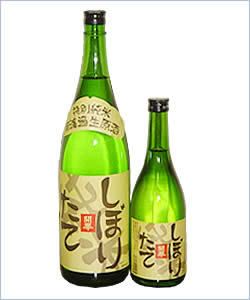
At this event, the following namazaké were being served: Dewa No Yuki Tokubetsu Junmai Namazaké (Yamagata), Gokyo "Arabashiri" Nama Genshu (Yamaguchi), Harushika "Shiboribana" Junmai Ginjo Namazaké (Nara), Kaika "Shiboritate" Tokubetsu Junmai Muroka Unfiltered Nama Genshu (Tochigi), Kamikokoro "Toukagen" Tokubetsu Junmai Nama Genshu (Okayama), Koshi No Homare Nama Genshu (Niigata) , Masumi Arabshiri Nama Genshu, Otokoyama Yukishibore Tokubetsu Junmai Kasumi-shu (Nagano), and Shutendouji "Oo-oni" Tokubetsu Ginjo Nama Genshu (Kyoto).

There were some notable obeservations from this event:

* Kamikokoro "Toukagen," using yeast from peach, had a drastically different feel than 2005 version, indicating that vintage does indeed matter in the world of saké. In 2005, Toukagen was mildly fruity and earthy with a clean and dry finish (SMV: +5), while 2006 was juicy fruit, no earthiness, and shockingly sweet (SMV: -11).

* Otokoyama and their seasonal release has one thing in common: they all have light presence of moromi (lees), which serve to provide extra oomph to the flavor. Most other brewers opt for undiluted apporach instead.

* Naturally, a saké that is not available in the U.S. tend to leave a lasting impression, and such was the case with Shutendouji "Oo-oni." The "Big Demon" was rich and fruity with a sharp and long, dry finish (SMV: +4, Acidity: 1.8).

Of all those, three really stood out for me. The first was Kaika (right, SMV: +1~+2, Acidity: 1.5, Rice: Gohyakumangoku, Seimaibuai: 59%, Yeast: N/A) with its fruity and juicy approach. I've always been a fan of their "Kaze No Ichirin" Junmai Ginjo, so I had high hopes and this did not disappoint.

There was another saké that I looked forward to trying, as I enjoy their other selection. That saké was Masumi Arabashiri (SMV: -1, Acidity: 1.8, Rice: 80% Miyamanishiki 20% Hitogokochi, Seimaibuai: 55%, Yeast: Assoc #7). Although the aroma was subtle, the flavor was expressive Japanese pear complemented by notes of cocoa. While the SMV shows -1, the firm finish of the Genshu makes it seem drier.

The aforementioned Otokoyama Yukishibore (left, SMV: +4, Aciditiy: 1.4, Rice: N/A, Seimaibuai: 55%, Yeast: N/A) was the most complex of the sakés. The flavor was a expressive and balanced notes of yogurt and white grapes, with a pleasantly dry finish.
********************************************************
April 13, 2006:

I attended a Saké & Beer Expo sponsored by a large saké importer, JFC Int'l. There were over 120 selections covering saké, shochu, and beer. I tried most of the saké and shochu on the list, but in the best interest of self-preservation, had to forgo beer.

Since the selections were far too many list, here are some awards:

Gold Medal: The top of the show goes to Daishichi Brewery's Kimoto Junmai Daiginjo, "Minowamon" (SMV: N/A, Acidity: N/A, Rice: Yamadanishiki, Seimaibuai: N/A, Yeast: N/A). Using a combination of the unique Super-flat Polishing Method and labor intensive Kimoto method, Daishichi Brewery produces a very fruity yet balanced Junmai Daiginjo. With a full mouthfeel and balance of fruitiness along with presence of amami and complemented by clean and dry finish, this saké has got it all.

Silver Medal: Chiyomusubi "Tobingakoi" Daiginjo (SMV: +6, Acidity: 1.2, Rice: N/A, Seimaibuai: 35%, Yeast: N/A) from Tottori Prefecture. This is made in a Shizuku (free-run) style, and adding the brewer's alcohol plays a significant part in its flavor profile. While Shizuku style tends to be soft and mild, this one is one of the most expressive saké on the market. It's almost like a fruit cocktail in a bottle, yet balanced and dry.

Bronze Medal: goes to Aiyu Shuzo's (Japanese only site) Tomoju Junmai Ginjo (SMV: +2, Acidity 1.5, Rice: Gohyakumangoku, Seimaibuai: 50%, Yeast: N/A) from Ibaraki Prefecture. This saké showcases Gohyakumangoku rice well, showcasing the fruity flavors of tropical fruits balanced by hints of chocolate on the finish. This medium-bodied Junmai Ginjo is easy drinking, and just plain delicious.

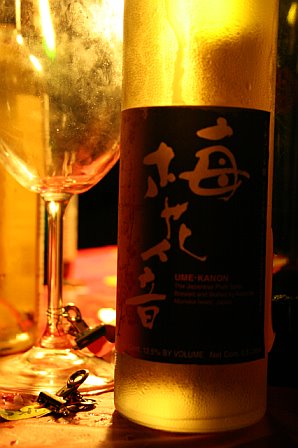
Eye-opener of the night: One of the benefits of attending events where 120+ beverages are served is that you are bound to come across something totally unexpected, and such was the case with the real Umeshu, a.k.a. Plum Saké. Ume Kanon (no data available), while similar in flavor to plum wines, is lighter in body and very complex. The nose of soft dried raisin and Japanese ume plum leads to a very gentle approach, flavors of ume, raisin, and lychee, packaged in a very well acidity with a balanced sweet and tart finish. Once you try Plum Saké, there is no going back to Plum Wines, that's for sure!
********************************************************
April 27, 2006:

This tasting featuring 5 brewers at Saké Hana as a very special event, as it turned out. Aside from getting to tasting several of the finest sakés, I got to meet two people I consider to be Saké Buddies (Henceforth, an official title in this blog.)

The event featured 5 breweries, mostly from central to southern Japan. The brewers were: Asahi Shuzo (Dassai) from Yamaguchi, Bonki from Kyoto, Fukucho Brewery (Biho) of Hiroshima, Gassan Shuzo from Shimane, and Tenzan Shuzo of Saga.

The first saké I sought out was the legendary Dassai "Migaki Niwari Sanbu" ("Polished to 23%", henceforth "Dassai 23"), which as the name imply, is the most refined saké available in the U.S. I head straight to the Dassai 23, and introduce myself to the young gentleman pouring the saké. The young gentleman turned out to be Mr. Kazuhiro Sakurai,the Vice President and 4th generation brewer of the Asahi Shuzo.

Dassai 23 (SMV: +4, Acidity: 1.1, Rice: Yamadanishiki, Seimaibuai: 23%, Yeast: N/A) is one of those special saké that seem to please everyone. Expressive yet gentle, the fruity elixir posseses enough character and fruitiness to appeal to the novices, while showcasing the elegance, complexity, and pleasingly dry finish to impress the connoiseurs. For those of you who have yet to try this, definitely put this on your life's "to do" list!

Sakurai-san then poured me their "50" Junmai Ginjo (SMV: +5, Acidity: 1.3, Rice: Yamadanishiki, Seimaibuai: 50%, Yeast: N/A). Time for a confession. Before I tried Dassai 23, I was thinking that maybe I shouldn't start with the 23 first, since everything else is all downhill. But on the other hand, I figured that it is best to taste 23 on the virgin palate, to maximize its impact. Naturally, I chose the latter.

As I braced for my first taste of the 50, I couldn't ignore my dilemma. "Sure, Dassai 50 is technically a Junmai Daiginjo by other brewery's standards, but it's not 23!" my so called logic chimed in. But guess what, it's fantastic!

While 23 featured balanced gentleness, fruitiness, and dryness, 50 was harmony of cleaness, fruitiness, and dryness. While the initial taste was daiginjo-like fruitiness, there was a harmonizing notes of grain that lead effortlessly to a ginjo-like cleaner and drier finish. And for about 1/3 the cost of 23, this is a tremendous bargain.

The next ones I tried were from Yoshida Shuzo, maker of Gassan labels . I have tried their sakés in the past, but that was well before I started taking extensive tasting notes, so without much recollection, it was like trying them again for the first time! Of the four I tried, I liked their "Tobira" Daiginjo (SMV: +5, Acidity: N/A, Rice: Yamadanishiki, Seimaibuiai: 35%, Yeast: N/A), made in the shizuku method. Shizuku method of gravity-aided free-run pressing produces a saké with rich yet gentle body and expression. This particular Daiginjo had a doughy nose followed by balance of fruitiness and mild spiciness leading to a dry finish. This saké oozes of "special occasion" designation for sure.

Somewhere along the way, I met Tim Sullivan of Urbansake.com, a website detailing Tim's journey into the world of saké. Little did I know at the time that our paths would cross often, and that he would eventually be one of the guiding force in my establishing this blog! I am sure you will see Tim's name mentioned here often.

Back to the topic at hand. The next two sakés were dessert style "Bonki" and sparkling Japon by Tanzan Brewery. Incidentally, both sakés possess similar data: (SMV: -60, Acidity: 5.8, Rice: Gohyakumangoku, Seimaibuai: 65%, Yeast: N/A). Bonki was kind of like light ume-shu, and high acidity makes it feel much drier than the SMV -60. Japon reminds me a bit of Italian dessert wine Moscato d'Asti, lightly sparkling with mild fruitiness.

Down the bar at Saké Hana was a Master Brewer Miho Imada from Fukucho Brewery in Hiroshima. Make that Ms. Miho Imada, a female Toji! Their Junmai Ginjo "Biho" (SMV: N/A, Acidity: N/A, Rice: Yamadanishiki Blend, Seimaibuai: 58%, Yeast: N/A) is actually named in her honor, where alternate pronunciation of kanji for "Miho" yields "Biho."

I've had Hiroshima sakés before, and they were known for their earthy, and sometimes funky style (think Suishin and Kamoizumi Shusen). This one was very different from any of the Hiroshima saké I've had, with its fruity flavors of lychee and pineapples. While the approach was soft and gentle, the finish was sharp and clean. This was very good.

All the way at the end was Tenzan Brewery. If the name doesn't ring a bell, the bamboo-leaf wrapped bottle of Jizake Tenzan Genshu sure should be a familiar sight! The Jizake Tenzan (SMV: +2, Acidity: 2.2, Rice: Saikai #134, Seimaibuai: 60%, Yeast: Assoc. #9) is a Genshu made using local rice, and has a nose of creamy grain and fruits. The flavor is an earthy and robust blend of steamed rice and dried fruits, and the finish is decidedly Genshu, firm and dry.

The last on the list was Japan-only Tenzan "Hotarugawa" Junmai Daiginjo Namazaké (SMV: 4, Acidity: 1.4, Rice: Yamadanishiki, Seimaibuai: 45%, Yeast: Assoc. #9). This was a very refreshing style, fruity melons with good depth and a lasting finish.

While that signals the end of the sampling portion of the evening, it also marked the start of evening long evaluation of the merits of both Dassai 23 and Dassai 50 with my newly found Saké Buddies...

Thursday, November 02, 2006

Review of 2006: March

2006 was a very eventful year in terms of my saké-related activities. It would be almost criminal, if I didn't take some time to review the highlights of the year in few brief installments.

Before doing so, I have to note that when I began this process, never did I dream that one day I would be a blogger and keep tab of what happened. Well, few of my good friends, including Tim Sullivan of Urban Saké Blog, suggested I start a blog.

After thinking to myself, "well, I'm not that computer illiterate, I know some html from participating in online BBs, and I'm pretty good with camera..." over the course of few month, the light did finally go on, and here we are.

I say this now, because back then, I did not religiously carry a camera to capture the essence of all the events. Therefore, bare with me on some of the older recaps when I am forced to entertain you with words and photos I "borrowed" (I swear I'll return them to where I found them!) instead of my original pictures...

March 27, 2006

Kazu and Mariko Yamazaki of Japan Prestige Saké Association invited me to a Taiheizan saké dinner at Matsuri Restaurant in Chelsea. This was memorable as the dinner featured not only sakés from Taiheizan, but they were served in the presence of Mr. Shin-ichiro Kodama, the President of the brewery.

First, a very brief introduction of the brewery: Taiheizan is named after the tallest mountains in their home prefecture of Akita. The kura was established in 1879. Their belief is to make their sakés through labor- intensive "kimoto" method, where fermentation is aided and accelerated by people physically mixing the mash using long oars. The resulting saké tend to be intense in aroma and flavor, and rich in umami.

Now the notes about the sakés. Data, depending on availability, includes SMV, acidity, rice type, polishing ratio (seimaibuai), and yeast.

The apertif was the sparkling and lightly nigori styled Harushika Tokimeki (SMV: -80, Acidity: 5.5, Rice: Nihonbare, Seimaibuai: 55%, Yeast: data N/A) from Nara. This is a light sparkler that I often compared to Moscato d'Asti, only more intense in flavor. Low in alcohol (7~8%), it is a refreshing and balanced saké owing to its acidity.

The main feature was of course sakés from Taiheizan. The Kimoto Junmai (SMV: +1, Acidity: 1.7, Rice: Miyamanishiki, Seimaibuai: 59%, Yeast: #1701) starts with aromas of rice, dried fruit, and grain. Full in body, the flavor is creamy with blend of nuts, cocoa, grain, and steamed rice. Finally, umami leads to a balanced finish. It paired wonderfully with the miso-marinated beef.

The biggest anticipation was the debut of Tenko, their Kimoto Junmai Daiginjo (SMV: +2, Acidity: 1.5, Rice: Yamadanishiki, Seimaibuai: 40%, Yeast: Assoc. #9). Yamadanishiki rice really comes alive in this saké, starting with a decidedly fruity on the nose, followed by a flavors of mild pear, melon, and pineapple complemented by bracing notes of grain that leads to a clean and dry finish. Although most of the daiginjo-class sakés I've had were very fruity and expressive, I do like this style of fruit/grain harmony with a clean dry finish. This is a winner, for sure.

The bonus was the first ever appearance in the United States for "A Zen Ai" Koshu (data N/A) by Wakatakya Brewery of Fukuoka Prefecture in the northern end of Kyushu Island. Evidently, this sherry-like aged saké was created in conjunction with Mr. Mikio Shinagawa, partner of the restaurant. A Zen Ai is made from Genmai, or brown rice, using the style from Genroku Era (1688-1704). It has been aged for 5 years, and has that very oxidized nutty and sherry-like aroma. The flavor starts with raisin before notes of dark chocolate and dried fruit kicks in, and the finish is mildly long.

All in all, a delightful evening, as fantastic décor, saké- friendly rustic style menu prepared by Chef Ono, and good company including the President of a saké brewery, is a winning formula for a Great Saké Experience.

Wednesday, November 01, 2006

Follow up on Nada

After Shushinkan, we tried hitting as many breweries as possible. Using the handy map/brochure available at local rail station, we find that there are 8 breweries listed.

Shushinkan was near the central western part of the stip, less than 10 minutes walk from Ishiyagawa train station. Since the majority of the breweries were to the east of Shushinkan, we had to rule out the famed Sawanotsuru Brewery.

After lunch and the tour, it was roughly 3:30 pm when we left Shushinkan. We set our sights to the nearest brewery, Sakashokan (Japanese only website).


The entrance was magnificent and traditional. As we enter the gates into a room, we find out that they only have a gift store/museum but no tours. That was unfortunate, as there were also no tastings. But, they did have a nice display to showcase their Nihonshu.

After leaving Sakashokan, we set course for the famed
Hakutsuru Brewery. By the time we got to Hakutsuru, it was little bit after 4:00 pm. That's when I realized that Brewerys close at 5:00 pm, meaning last entry was at 4:00 pm. We were out of luck seeing Hakutsuru tour, but we did pass along massive tanks making us wonder about their capabilities (the area in front is an outdoor tennis court, to give you some perspective.)

Unfortunately, Kikumasamune closed even earlier at 4:30 pm, so that was out of the question. The only brewery we could visit was Sakura Masamune Museum "Sakura-En" (Japanese only website), which was open until 7:00 pm (closed on Tuesdays).

The museum was totally rebuilt after the earthquake of 1995, so everything was very clean and well-kept. The museum started on the first floor and up to the second floor, featuring some interesting artifacts including old saké making equipments and history of bottles, somewhat visible on the right side of the photograph below.

The shop on the first floor sold saké and accessories, and there was one thing that caught my attention, something I have never seen before: a red sake called "Hanashizuku Aka."

Red sakés are result of using either one of two ingredients: red colored yeast or red rice. This saké was made using a very old type of red rice called "Shikokumai," translated as "purple black rice." Although slightly lower in alcohol at 13~14%, it is dry with SMV rating of +3 and acidity of 1.3. Naturally, this was one of those items I took home with me to NYC.

Having tried the saké in NYC (only benefit of retro-blogging!) I took the following notes:

Pink grapefruit, with creamy rice on the nose. Medium body, yet light on the flavor. Cherry-like flavor and grain on the palate, leading to slightly tart and dry finish.

In the end, if I had to do it all again, I would have started with Sakura Masamune, which opens at 10:00 am, then headed west. Lunch at Sakabayashi Restaurant at Shushinkan is a must, be sure to call ahead for reservation for your seat as well as your order of the hand-made soba. Take a nice walk along the riverside, before concluding the tour at Sawanotsuru Brewery. Kanpai!

Tuesday, October 31, 2006

In the beginning...

Although it was slightly more than one year ago, I still remember my visit to Nada, Japan in October, 2005. Nada, not to be confused with Nara, is a famed saké production center blessed with perfect water (Miyamizu from “Rokkosan” mountains), the best rice (the famed Yamadanishiki), and geography (port, ideal for trade.) This "perfect storm"-like convergence of ideal elements led to a burgeoning production of Nihonshu, deemed the best in the country. For red wine drinkers, consider Nada as saké equivalent of Bordeaux.

Although the production of saké pales in comparison to the days of yore, Nada is still famous for sakagura (saké brewery) tours.

Thus, it is no surprise that after my trip to Kansai region was booked, Nada sakagura tour was high on my list.

I arrived at Kansai International Airport around 3:45 pm on Friday, 9/30/06. By 1:00 pm the next day, I found myself sitting at a table of Sakabayashi restaurant located inside Shusinkan Brewery, (est. 1751) eating the best hand made tempura soba in the world to start my tour. Between “Wa” influenced interior, freshly grated wasabi, tempura, all the while sitting with your girlfriend… life doesn’t get much better than this!


Appropriately named Shushinkan, which means “spirit of the saké lodge,” gave me a complete guide of their brewery, explaining all aspects of production starting with the video (also available in English), followed by tour of the premises, before concluding with tasting.

The tour guide, former toji (brewmaster) of the brewery, was very informative, and after finding out that I work in NY as a saké consultant, his enthusiasm went up few notches, and delved deeper into technical aspect of saké production, covering such topics as creating koji (yeast starter mold) to shizuku pressing (free-run method).

The part I looked forward to, naturally, is the tasting. Their sakés are released under the label “Fukuju,” and the tasting began with the typical junmai, then ginjo/junmai ginjo, then daiginjo/junmai daiginjo, followed by their low alcohol (6~7%) Riesling Kabinett-like dessert saké “kome kome shu.” To my surprise, he then went to the back to the refrigerator room. “For you,” he said, “you have to try this.” It was an aged daiginjo, still transparent in color. "It's 5 years old," I am told, as I enjoy the clean tasting elixir.

"Hold on," he says as he goes back to the refrigerated room. He comes back with another jug. "This one, it's 10 years old," he remarks as he tips the jug. He notices that there is barely a drink left.

Without hesitation, he emptied the contents to this very grateful visitor. "For you... no problem. Please try!"

While tasting 8 shots of saké can generally get me warm and happy inside, I knew that I did not owe this sensation just from tasting saké. That's when I had a revelation: Great Saké Experience= Rice + Water + Yeast + Friend(s).

I knew that in this day and age (in Japan), when shochu can be more popular than saké especially among the younger crowd, he found a kindred soul, someone he deemed worthy enough to share the last priviledged drops of their sacred craft... when that realization hit me in conjunction with mellow yet clean, fruity, and well-balanced water from the heavens, the event changed from merely tasting saké to a truly Great Saké Experience.

As I realize one year later, Great Saké Experience always involve saké (rice, water, yeast, perhaps brewer's alcohol) and friends. This blog will chronicle my journey as I attempt to seek Great Saké Experience.